Hebei Buteo International Co., Ltd.

How to Choose the Right Granite Grinding Wheel

Table of Content [Hide]

    In industries such as stone processing, metal polishing, or ceramic cutting, granite grinding wheels are indispensable tools, and their selection directly impacts processing efficiency, finished product quality, and even operational safety. Faced with the plethora of granite grinding wheel products on the market, making the right choice has become a focal point for many craftsmen and technicians. This article provides a detailed purchasing guide from several key dimensions.


    Clarify Processing Needs to Lay the Foundation for Selection


    Before choosing a granite grinding wheel, the primary task is to clarify your processing needs. This includes the type of material to be processed (such as granite, marble, metal, or ceramics), the processing method (cutting, grinding, polishing, etc.), the required processing accuracy, and the production efficiency needs. Different processing needs have different requirements for the grinding wheel's material, grain size, hardness, and shape. For example, for cutting hard stones like granite, you should choose a grinding wheel with higher hardness and moderate grain size; while for fine polishing operations, you would prefer products with fine grain sizes and moderate hardness.


    Understand the Grinding Wheel Material to Ensure Durability and Efficiency


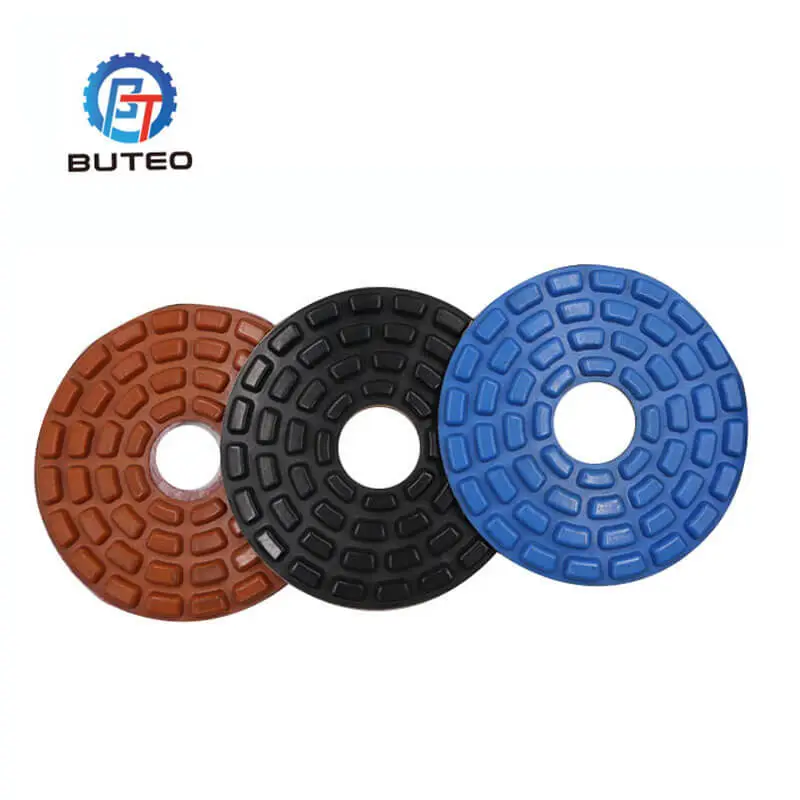
    The material of the granite cutting wheels directly determines its durability and processing efficiency. The common grinding wheel materials on the market include resin-bonded, ceramic-bonded, and metal-bonded wheels. Resin-bonded grinding wheels have good self-sharpening and impact resistance, suitable for general cutting and grinding operations; ceramic-bonded grinding wheels are known for their high hardness and excellent wear resistance, especially suitable for high-speed cutting and heavy-duty processing; and metal-bonded grinding wheels exhibit outstanding performance under extreme processing conditions due to their high strength and high-temperature stability. It is crucial to choose the appropriate grinding wheel material based on specific processing needs to ensure processing quality and efficiency.


    Pay Attention to Grain Size and Hardness for Fine-Tuned Processing Effects


    Grain size and hardness are two other important parameters of granite cup wheel. The grain size determines the surface roughness of the wheel, thereby affecting the smoothness of the processed surface. Generally, the finer the grain size, the smoother the processed surface; the coarser the grain size, the higher the processing efficiency but the roughness of the surface also increases. Hardness reflects the grinding wheel's ability to resist wear and maintain shape. Grinding wheels with excessively high hardness may cause scratches or cracks on the processed surface; meanwhile, grinding wheels with excessively low hardness wear out too quickly. Therefore, it is necessary to reasonably match the grain size and hardness of the grinding wheel based on the hardness of the processing material and processing requirements when making a selection.


    Consider Safety and Environmental Protection to Safeguard Healthy Production


    While pursuing processing efficiency and quality, we cannot overlook the safety and environmental friendliness of grinding wheels. In terms of safety, the selected grinding wheel should comply with relevant safety standards, have sufficient strength and stability to avoid breakage or scattering accidents during high-speed rotation. Additionally, the grinding wheel should be carefully inspected before use to avoid using wheels that are cracked, damaged, or unbalanced. Regarding environmental protection, as the awareness of environmental issues rises, more and more companies are paying attention to the environmental protection issues in grinding wheel production and use. Choosing environmentally friendly grinding wheel materials and production processes not only helps reduce environmental pollution but also enhances the company's image and brand value.


    In summary, selecting the appropriate granite grinding wheel requires considering multiple aspects, including processing needs, grinding wheel material, grain size and hardness, as well as safety and environmental protection. Only through comprehensive understanding and precise matching can you ensure efficient, safe, and environmentally friendly processing, bringing greater benefits and value to your production.

    Vivian
    Vivian

    I am Vivian. I have been working in diamond tools for 22 years, having a deep understanding of the global market for diamond tools. I can provide you with professional advice and guidance. Our factory has been engaged in the diamond industry for over 30 years, having a precise grasp of industry trends. We have deep cooperation with 60+clients in over 100+ countries we have collaborated with, continuously improving our products through cooperation with customers. More adaptable to the needs of the market.

    Products
    References
    More News About Diamond Tools
    Apr 03-2025
    Diamond Tools Empower Saudi Arabia’s Vision 2030: A Game-Changer for Efficient Infrastructure and Market Opportunities
    Saudi Arabia’s "Vision 2030" is reshaping the nation’s economic landscape through unprecedented infrastructure development, with over $1.1 trillion invested in housing, renewable energy, s...
    Diamond Tools Empower Saudi Arabia’s Vision 2030: A Game-Changer for Efficient Infrastructure and Market Opportunities
    May 26-2024
    Grinding Disc for Granite: Exploring Different Sizes and Diameters
    In many industries such as stone processing, ceramic manufacturing and metal surface treatment, grinding disc for granite is an indispensable tool. However, different sizes and diameters of grinding d...
    Grinding Disc for Granite: Exploring Different Sizes and Diameters
    Jul 15-2025
    How to Weld Diamond Segments to the Substrate More Securely?
    Ensuring a durable bond between diamond segments and the blade core is critical for performance and safety in stone cutting. Poor welding can lead to segment detachment, compromising efficiency. Below...
    How to Weld Diamond Segments to the Substrate More Securely?